


Here's how most remote teams introduce a new hire: the manager posts "Everyone welcome Sarah, she's joining the platform team! Say hi 👋" — and Sarah, four hours into a job where she knows nobody, has to improvise a public bio in front of forty strangers while twelve wave emojis roll in from people she can't tell apart. That's not an introduction. That's an ambush with good intentions. The first impression a new teammate makes shouldn't depend on how well they freestyle under pressure on day one — and it doesn't have to, because good intros have a structure, and structure is automatable.
The short version: great new-hire intros are drafted privately, prompted with real questions (not "say hi!"), include one playful hook the team can respond to, and get published as a proper card the whole team piles onto. You can run that by hand with the templates below — or let a bot like Tribe run it automatically every time someone joins.
Why the "say hi to Sarah!" post fails
- It puts the burden on the person with the least context. The newest member of the team is asked to perform, publicly, with zero guidance on tone, length, or what this team actually shares
- It produces nothing to respond to. "Hi, excited to be here!" gives teammates no hook — so they wave an emoji and move on, and the thread dies in an hour
- It's unsearchable two weeks later. When someone wonders "wait, what does Sarah work on?", a buried chat thread with no structure answers nothing
- It doesn't happen at all for the second hire. Manual rituals depend on the manager remembering — and the fourth hire of the quarter gets a one-line mention if that
None of this is hypothetical for remote teams. Microsoft found that 56% of new hires who met an onboarding buddy at least once in their first 90 days said the contact helped them become productive quickly; that rose to 97% among people who met their buddy more than eight times. An intro post is only the first connection ritual, but it gives the team a concrete way to start that relationship.
The anatomy of a great new-hire introduction
- Draft it privately, publish it publicly. The new hire answers prompts in a DM or form, at their own pace, before anything goes to the channel. Public performance anxiety gone
- Ask three real questions. Who are you and what will you be doing here? What were you doing before? What are you into outside work? Specific prompts beat "introduce yourself" every time
- Add one playful hook. An icebreaker the team can engage with — Two Truths and a Lie is undefeated, because guessing the lie gives everyone an excuse to reply with actual sentences instead of emojis
- Include a face. A photo (or at least a decent avatar) — remote teammates will meet the intro card before they ever meet the person
- Publish it as one polished post the team can react to, reply to, and find again later
Running this manually? Steal our day-one welcome template and send the prompts yourself before each start date. It works — it's just on you to remember, every time, forever. Which brings us to the bot.
Automating it: how Tribe runs new-hire intros
Tribe turns that anatomy into a flow that fires automatically whenever someone new joins your Slack channel, Google Chat Space, or Microsoft Teams team. No form links, no HR ticket, no manager remembering:
- Tribe notices the join and privately messages the new person — never a public call-out
- They answer at their own pace: a short self-intro (who they are, what they'll be working on) plus one randomly assigned icebreaker from a rotating set of ~30 playful prompts — Two Truths and a Lie, "most people don't know that I ___", quick-fire favorites — and a photo if they like
- Tribe publishes a single "Meet the new teammate" card to the channel: intro first, icebreaker hook second, photo included
- The team does what teams do — guesses the lie, finds the shared hobby, and the new person's first thread is a warm one
- Nobody gets forgotten: if the intro sits unanswered, Tribe nudges gently (twice, days apart, then stops — it's a welcome, not a collections agency), and day-1 and day-7 private check-ins ask how the first week is actually going
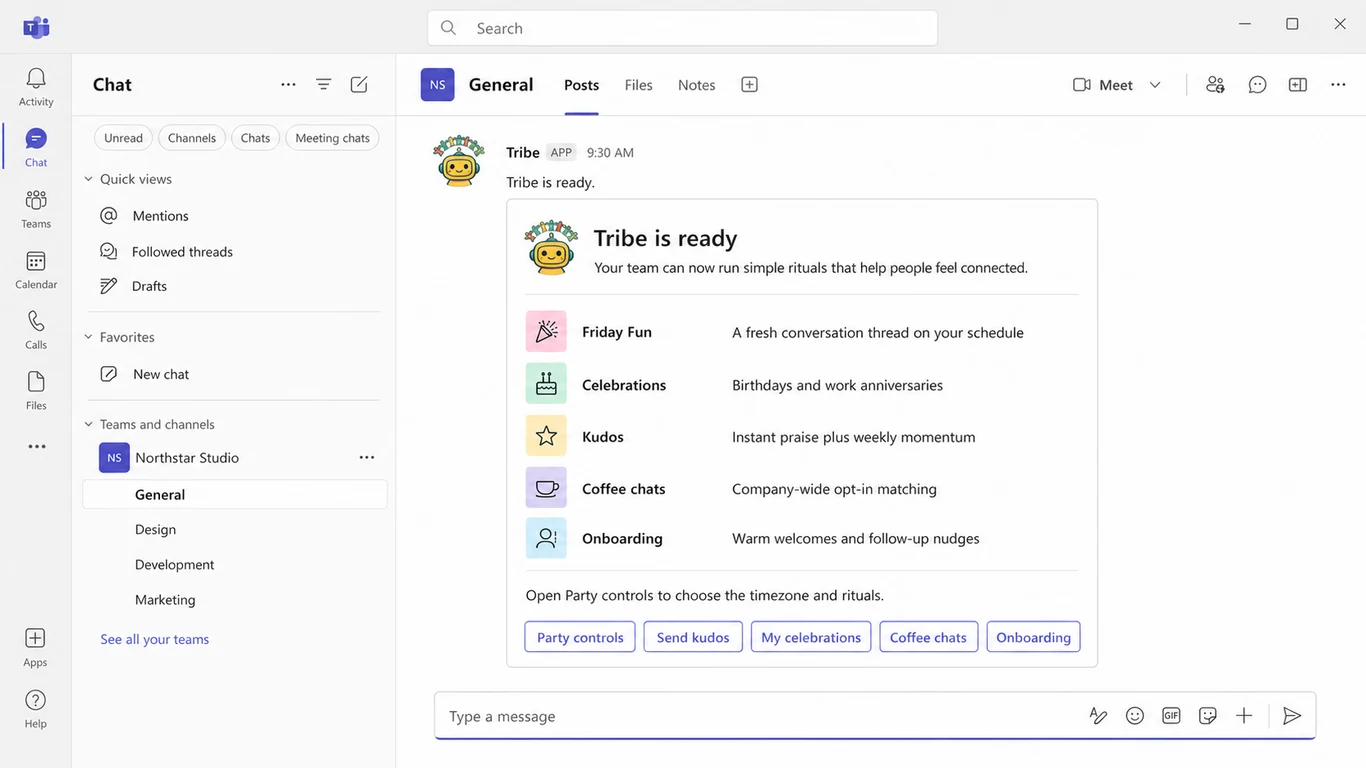
The intro flow is part of Tribe's broader onboarding: new joiners can also get pointed to the channels worth joining, and — since intros feed into the same profile as birthdays and work anniversaries — the teammate who introduced themselves in week one gets celebrated automatically in month six. Onboarding intros are included with Tribe today, alongside free kudos and icebreakers.
Other tools that do new-hire intros (and who they're for)
- Donut (Slack) — onboarding Journeys are a flagship paid feature. Standard (from $74/month annually) includes HRIS sync; Premium (from $119/month annually) adds unlimited Journey messages and automations plus prebuilt Journeys. The free tier caps at 3 automated messages in one journey. Deep, HR-grade, and Slack-only for the full experience
- CoffeePals (Teams) — pairs new hires into onboarding buddy chats as part of its coffee programs (Pro from $45/month). Buddy matching rather than public intros
- CultureBot (Slack + Teams) — onboarding journeys on its Pro tier; pricing is quote-based
- LEAD.bot (Slack + Teams) — onboarding and buddy programs begin on its Engagement plan, from $99/month
- Microsoft's NEO & Onboarding Buddy templates (Teams) — free Power Platform/SharePoint templates your IT team self-deploys and maintains. Legitimate for zero-budget orgs with IT capacity; nobody would call them fun
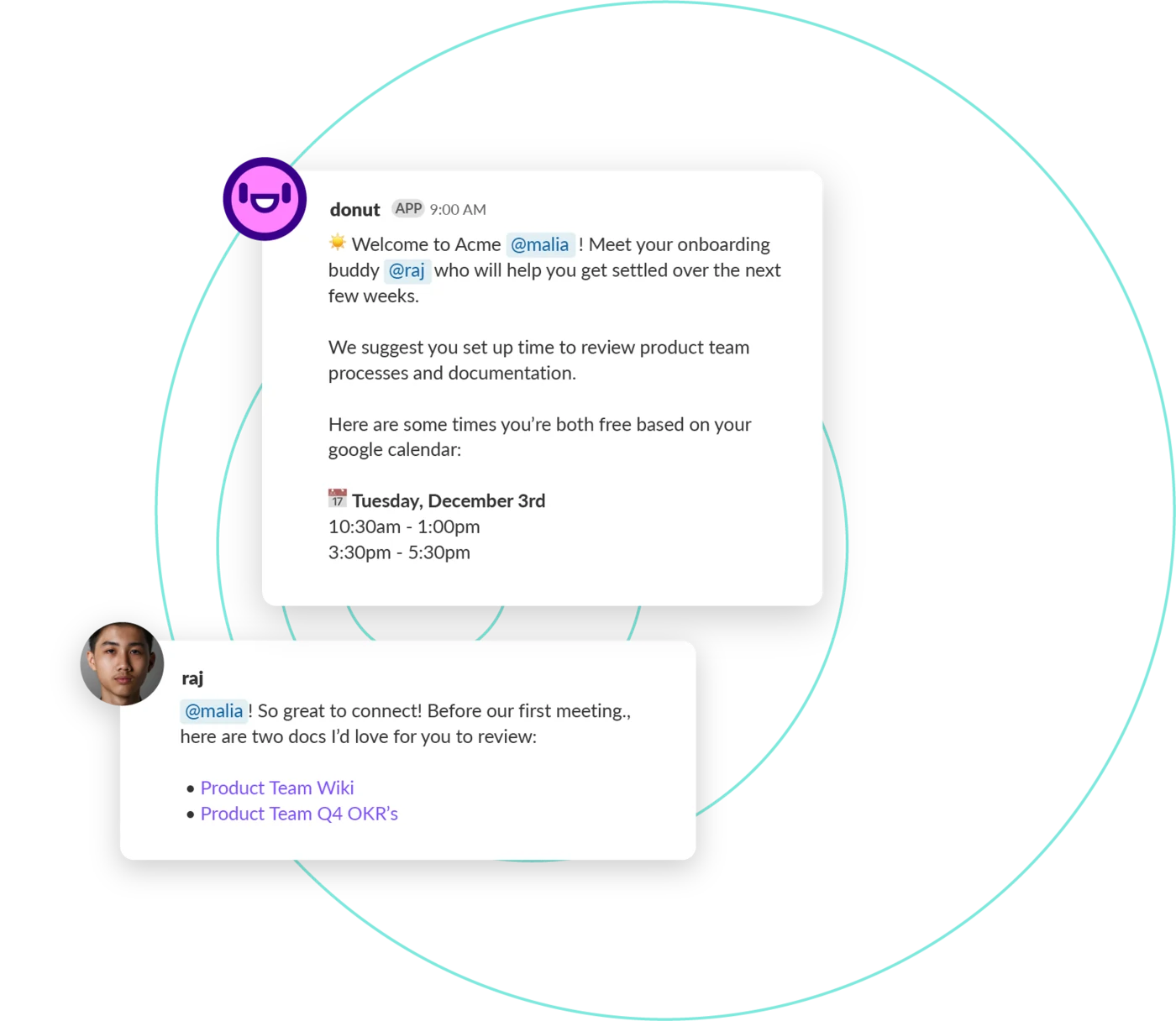
The honest segmentation: if People Ops needs HRIS-connected, multi-step onboarding programs, Donut's paid Slack plans are the deep end. If what you want is every new joiner getting a warm, structured introduction in chat without someone remembering to run it, that's the narrower slice Tribe automates.
Conclusion
A useful new-hire introduction bot removes blank-page anxiety and gives colleagues a specific reason to reply. It should collect answers privately, publish one structured post, and follow up without replacing the manager or onboarding buddy. Choose an HR-grade journey tool for multi-step, HRIS-connected onboarding; choose a focused bot when the main failure is simply that warm introductions do not happen consistently.
Sources checked
- Microsoft WorkLab: onboarding in a hybrid world
- Microsoft Research: remote onboarding advice
- Donut pricing and Journey packaging
- Microsoft New Employee Onboarding Solution Accelerator